Ben Black.
  • Home
  • Publications
  • Presentations
  • Posts
  • Download CV
Hi there, I'm

Ben
Black.

Head of the Working Group Data & Modelling Infrastructure for Living Labs, at ZALF.

A scientific researcher working on spatial modelling, data and scientific visualisation. I share the work that doesn't always make it into papers — code, maps and field notes — in the hope that it's useful.

Ben Black

Selected Publications

All publications
2026
Identifying robust area-based conservation strategies to secure ecosystem service provision under uncertainties
Journal of Environmental Management
DOI Preprint Code Plain-language summary

Overview

<p>Protected areas are the primary strategy for preserving biodiversity globally, with countries committed to protecting 30% of land by 2030 under the Kunming-Montreal Global Biodiversity Framework. However, conservation planning typically relies on current data about where species live and which areas provide important ecosystem services, without adequately considering two critical uncertainties: how climate change and land use will shift these patterns in the future, and what society values most in terms of conservation goals. This study demonstrates a comprehensive approach to testing different conservation strategies under uncertain future conditions, using Switzerland as a case study to identify which approaches will be most effective regardless of how the future unfolds.</p>

Key findings

<ul> <li>Areas currently prioritized for protection based on their ecological value showed little overlap with regions that will be most robust for ecosystem services in the future, highlighting the danger of ignoring future changes in conservation planning.</li> <li>The most consistently effective strategy across all scenarios involved rapidly expanding protected areas to 30% coverage, beginning as soon as possible, and prioritizing many small patches rather than a few large ones.</li> <li>Combining both preservation (protecting existing natural areas) and restoration (converting degraded land back to natural states) proved more robust than relying on either approach alone.</li> <li>High-elevation regions in the Swiss Alps showed the most stable and increasing ecosystem service provision under future scenarios, while lower-elevation areas face more variable outcomes depending on urbanization and agricultural pressures.</li> <li>Different ecosystem services responded differently to conservation strategies, meaning optimal approaches must account for societal preferences about which services to prioritize.</li> </ul>

Methods

<p>This research integrated spatial conservation planning software with scenario-based simulation modeling to test 216 different conservation strategies under five scenarios representing different climate futures, land use changes, and conservation priorities. The scenarios were developed through a participatory process and ranged from prioritizing biodiversity hotspots to focusing on culturally significant landscapes or areas providing high ecosystem services.</p> <p>For each combination of strategy and scenario (1,080 simulations total), the team modeled land use changes and mapped 10 ecosystem services across Switzerland from 2020 to 2060 at high spatial resolution. These services included habitat quality, carbon storage, water regulation, pollination, agricultural productivity, recreation potential, and habitat for emblematic species. The simulations tested variations in when to establish protected areas, how quickly to expand them, what total coverage to achieve, whether to prioritize large or small patches, and whether to focus on preservation or restoration.</p> <p>Statistical modeling and clustering techniques identified which strategies consistently led to optimal ecosystem service outcomes across the different future scenarios, revealing approaches that are robust to uncertainty rather than optimized for a single predicted future.</p>

Implications

<ul> <li>Conservation planning must shift from using static snapshots of current conditions to "stress-testing" proposed plans against multiple plausible future scenarios of climate and land use change.</li> <li>For Switzerland specifically, achieving the 30% protection target will require immediate action, as delaying establishment of new protected areas significantly reduces their effectiveness in maintaining ecosystem services.</li> <li>The finding that small patches distributed across human-dominated landscapes performed better than large consolidated areas suggests conservation should focus on protecting numerous smaller sites, particularly in lowland agricultural and urban regions.</li> <li>The methodology demonstrated here can be applied by other countries pursuing the global 30x30 target, providing a framework for identifying conservation strategies that remain effective despite uncertainty about future conditions.</li> <li>Conservation plans should directly incorporate ecosystem services alongside biodiversity data, as prioritizing areas based on current service provision proved more effective than focusing solely on species distributions.</li> <li>Successful conservation will require adaptive management that combines multiple approaches—preservation and restoration, large reserves and small patches—tailored to different regional contexts rather than applying a one-size-fits-all strategy.</li> </ul>
2026
Temporal Archetypes of Nature's Contributions to People for Sustainable Landscape Development
Regional Environmental Change
DOI Plain-language summary

Overview

<p>Current landscape planning approaches like Ecological Infrastructure (EI) often overlook how Nature's Contributions to People (NCPs) change over space and time. This study addresses that gap by applying archetype analysis to projected future NCP changes in Switzerland. Using deep learning techniques and seven key NCPs—carbon storage, water yield, habitat quality, nutrient retention, food and feed, pollination, and sediment retention—the study identifies recurring spatial patterns of NCP change between 2020 and 2060 and contextualizes them through expert interviews, providing actionable insights for adaptive, forward-looking landscape planning.</p>

Key findings

<ul> <li>Six distinct temporal archetypes of NCP change were identified across Switzerland, ranging from regions with high NCP gains but severe water stress to lowland areas experiencing significant declines in multiple NCPs.</li> <li>Lowland areas (large valley plains, the Jura, and parts of the Swiss Plateau) face the most pronounced declines, particularly in food and feed, pollination, and habitat quality.</li> <li>Alpine and pre-Alpine regions tend to show stability or gains in NCPs such as water yield, carbon storage, and food and feed provision.</li> <li>Nature-positive scenarios (EI-SOC, EI-CUL, EI-NAT) shifted NCP trends toward more positive outcomes compared to Business as Usual, though habitat quality and pollination still declined even under the best scenarios.</li> <li>Climate change is the dominant driver for water yield and sediment retention (60–93% contribution), while land-use change disproportionately affects food and feed provision and habitat quality.</li> <li>Archetypes with declining NCPs also showed reduced climate suitability for biodiversity, highlighting the interconnectedness of NCP provision and biodiversity potential.</li> </ul>

Methods

<ul> <li>Spatially explicit NCP change rasters (25 m resolution) were generated for seven NCPs under four scenarios (BAU, EI-SOC, EI-CUL, EI-NAT) for 2020 and 2060.</li> <li>Deep Convolutional Embedded Clustering (DCEC), combining convolutional neural networks with clustering, was applied to identify six temporal archetypes of NCP change.</li> <li>Silhouette analysis determined the optimal number of clusters and PCA explored dominant variance patterns across NCP layers.</li> <li>Random forest models identified the dominant climatic and land-use drivers of NCP changes for each archetype.</li> <li>Climate suitability projections for over 7,000 species were compared with NCP change patterns to assess biodiversity–NCP alignment.</li> <li>Seven semi-structured expert interviews with stakeholders from park management, research, federal agencies, and private offices contextualized the quantitative findings.</li> </ul>

Implications

<ul> <li><strong>Region-specific strategies needed:</strong> The pronounced regional disparities in NCP trajectories underscore the need for spatially tailored landscape planning rather than one-size-fits-all approaches.</li> <li><strong>Forward-looking planning is essential:</strong> Static, snapshot-based approaches to conservation fail to capture the dynamic nature of social-ecological systems; integrating future NCP and biodiversity projections can improve planning effectiveness.</li> <li><strong>Biodiversity underpins NCPs:</strong> Experts emphasized that biodiversity is foundational to NCP delivery and cautioned against reducing conservation to NCP metrics alone.</li> <li><strong>Transdisciplinary collaboration is key:</strong> Effective landscape planning requires improved communication and collaboration among policymakers, scientists, land managers, and local communities.</li> <li><strong>Transferable methodology:</strong> The archetype approach combining deep learning with expert knowledge can be applied to other regions to guide sustainable landscape development under uncertain futures.</li> </ul>
2026
The PAVE pathway: how to talk about models with people who did(n't) build them
Bioscience
DOI
No matching items

Recent Presentations

All presentations

Climate Change Impacts On Swiss Mountain Ecosystem Services: A Land Use Change Perspective.
Sep 2025
event Conference presentation
location Innsbruck, Austria

Combining normative scenarios and exploratory conservation policies for delineating robust Alpine protected areas
Sep 2025
event Conference presentation
location Innsbruck, Austria

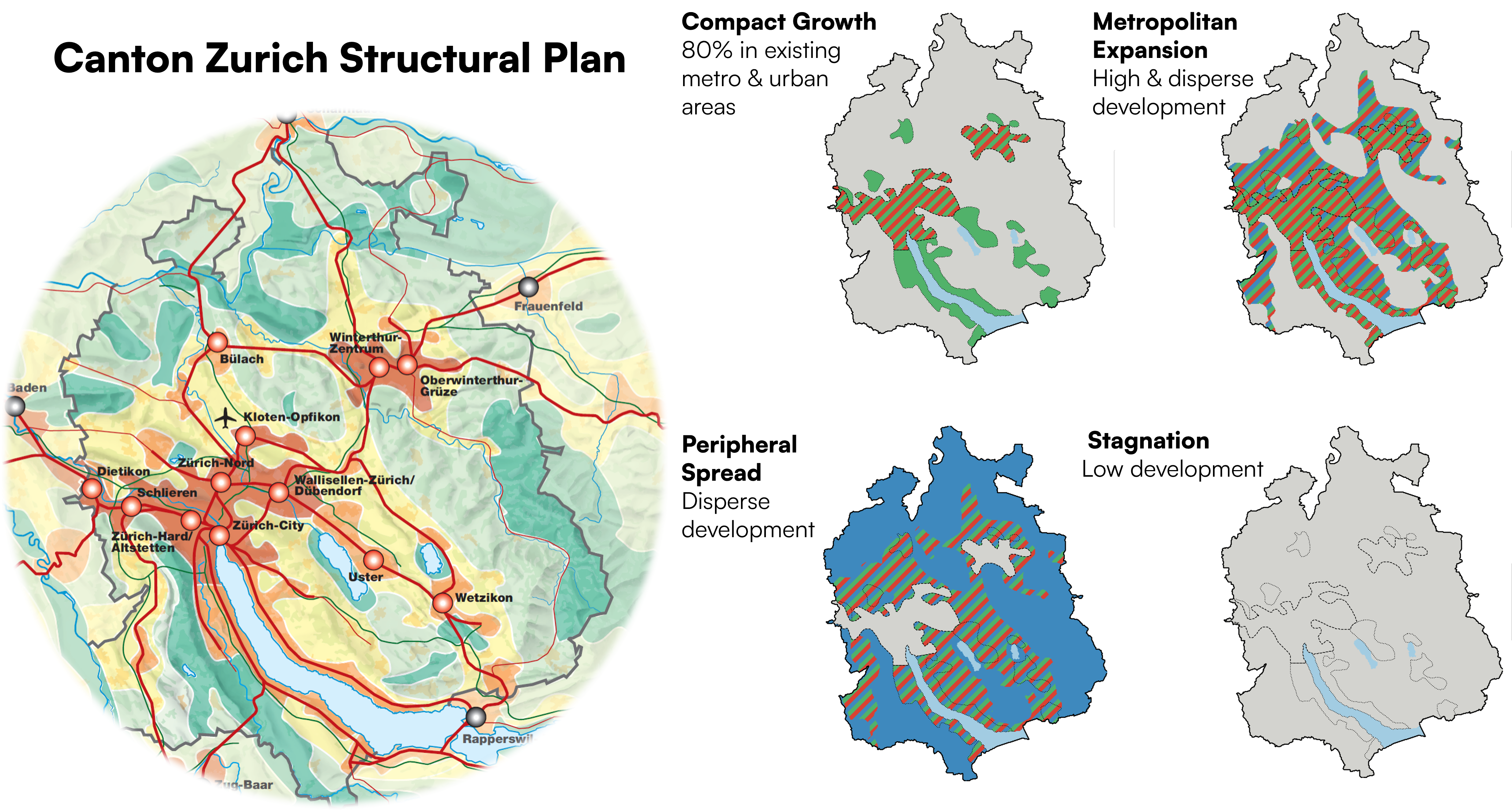
A “Scope, Simulation and Story” approach to identify future spatial development scenarios
Jun 2025
event Computational Urban Planning and Urban Management Conference
location London, United Kingdom
No matching items

Posts

All posts
Diving into presentation templates with Quarto: RevealJS and PowerPoint
R
Quarto
Reproducible research
Automation
Open science
Jun 2026

Screenshot of the ValPar.CH Praxis Navigator

From research to practice: The ValPar.CH Praxis Navigator
biodiversity
spatial planning
decision support
Apr 2026

Building an interactive bi-variate map for exploring robustness of ecosystems services and biodiversity under future uncertainty
javascript
d3
geotiff
data-visualization
conservation-planning

A short write-up on developing a browser-based map for exploring the robustness of ecosystem services and biodiversity under uncertain futures.

Apr 2026
No matching items

Beyond the papers

All outputs
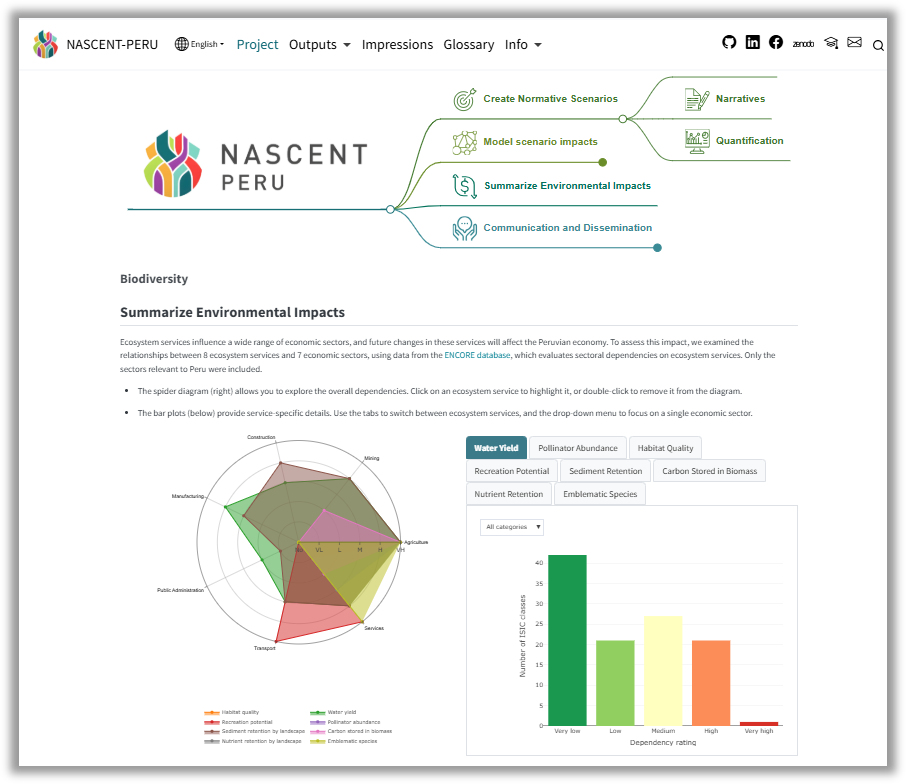
NASCENT-Peru Project Website
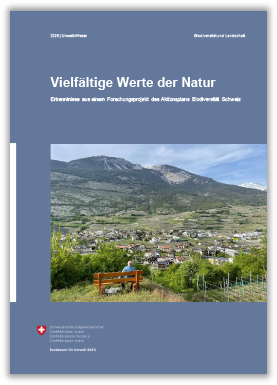
ValPar.CH Synthesis Report
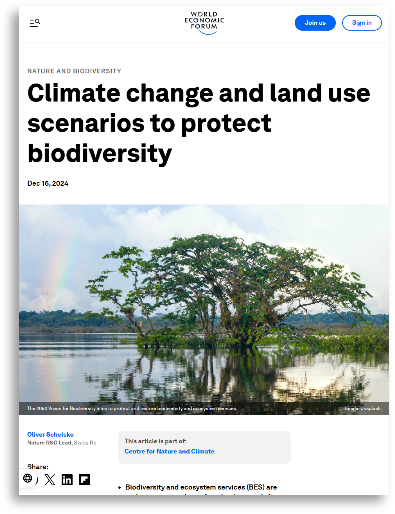
Op-Ed for World Economic Forum
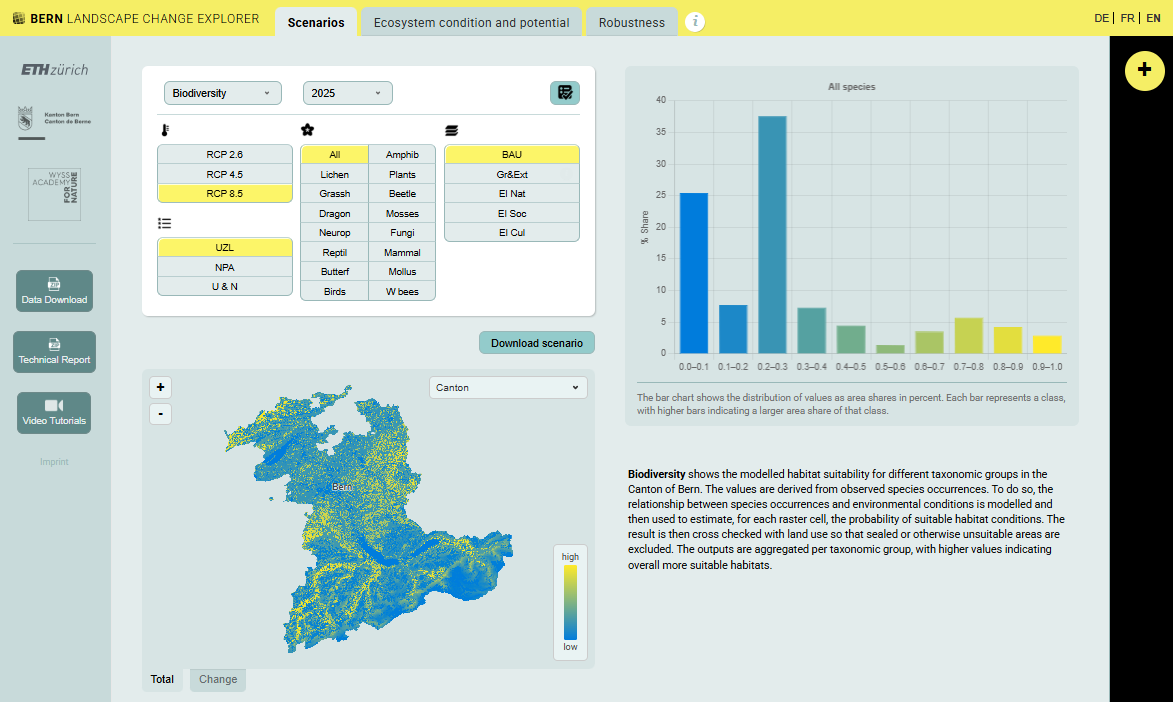
ValPar.CH Land Use Scenario Explorer
No matching items

Let's talk.

Open to collaboration on spatial modelling, scientific visualisation and reproducible research.

benjaminsamuel.black@zalf.de

Site

Publications Presentations Posts CV

Elsewhere

GitHub Google Scholar ORCID LinkedIn
© Benjamin Black 2026 · CC BY-NC-SA 4.0 Made with Quarto